Renewed Hope Cannot Be Treated Abroad: Nigeria’s Fragile Health System, Medical Tourism, and the Leadership Question
Renewed Hope Cannot Be Treated Abroad: Nigeria’s Fragile Health System, Medical Tourism, and the Leadership Question
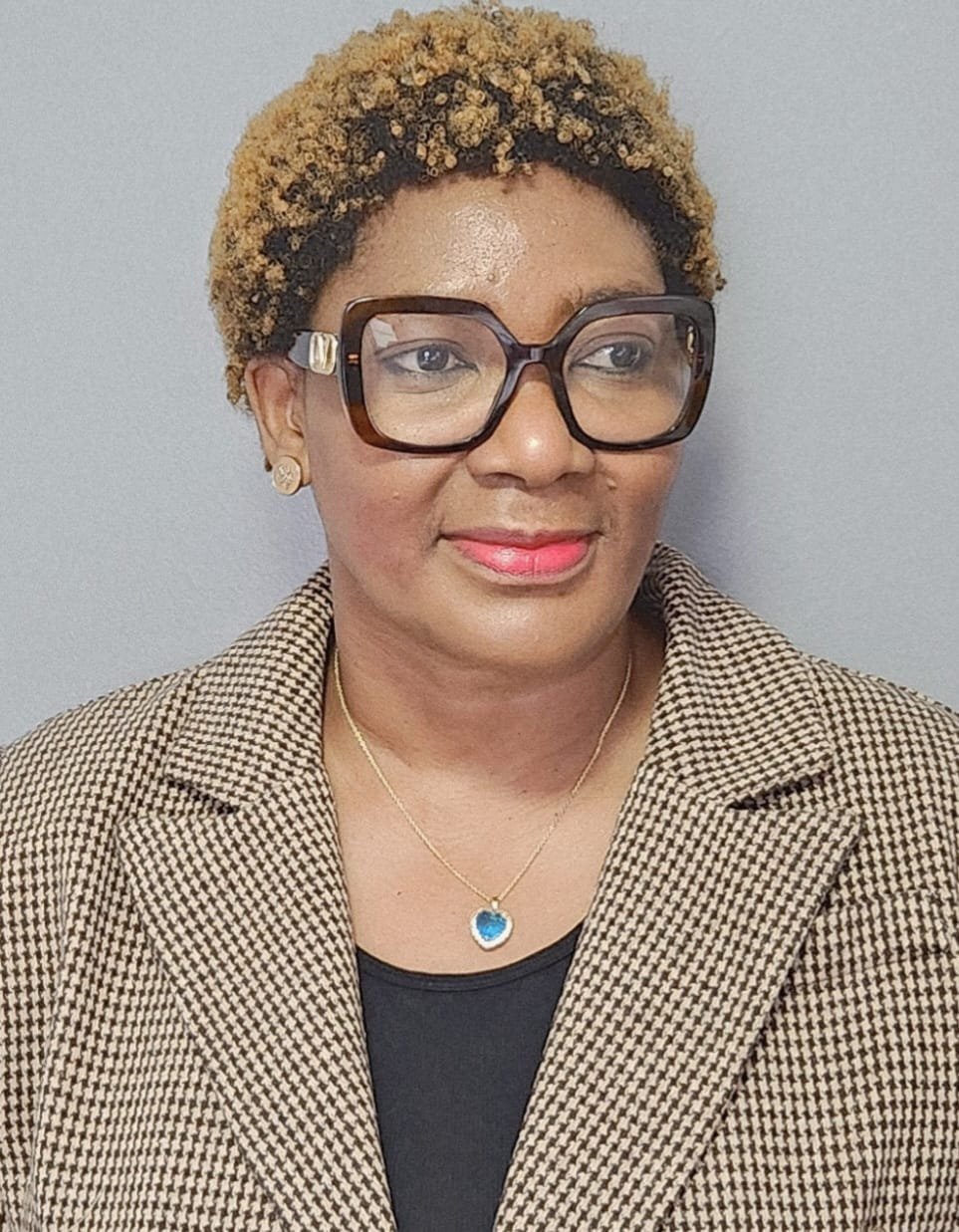
By Dr. Nana Akaeze
This is my voice. This is my belief.
When the United States Department of State updated its Nigeria Travel Advisory on April 8, 2026, one phrase stood out with painful clarity: travelers were told to reconsider travel to Nigeria because of crime, terrorism, unrest, kidnapping, and “inconsistent availability of health care services.”
That phrase should trouble every Nigerian leader.
It should trouble President Bola Ahmed Tinubu. It should trouble his cabinet. It should trouble every governor, senator, minister, political appointee, and public official who speaks beautifully about reform while quietly depending on foreign hospitals when their own health is at stake.
Because when a foreign government warns its citizens that healthcare services in Nigeria may not be consistently available, it is not merely warning foreigners. It is exposing what ordinary Nigerians already know.
It is exposing a country where the rich can escape the system while the poor are trapped inside it. It is exposing a country where leaders travel abroad for medical checks and treatment while citizens are left with hospitals struggling with poor infrastructure, unstable electricity, limited drugs, overworked doctors, exhausted nurses, and emergency services that often fail when they are needed most.
This is one of the deepest moral failures of Nigerian leadership.
The same leaders who have the power to fix the health system often behave as though Nigeria is only good enough to govern, but not good enough to heal them.
A nation cannot keep sending its leaders abroad for medical care while ordinary citizens are left to struggle in hospitals without stable electricity, essential medicine, modern equipment, emergency response, or enough doctors and nurses.
Who heals the people when those elected to fix the system no longer trust the system themselves?
This question has become even more urgent after recent discussions around Nigeria’s long history of medical tourism among its leaders. In their Vanguard article titled Nigeria’s Long History of Medical Tourism at the Top, Njide Ndili and Femi Olugbile reflected on the death of former President Muhammadu Buhari and noted that he had traveled to the United Kingdom for medical treatment before his passing. They also reminded Nigerians that this pattern was not new. It has long been part of Nigeria’s elite political culture.
The article referenced past leaders, including Ibrahim Babangida, Umaru Musa Yar’Adua, Goodluck Jonathan, Olusegun Obasanjo, and President Bola Ahmed Tinubu, as part of a broader national reality where leaders and top public officials often seek healthcare abroad.
This is not just about one president.
It is about a system.
It is about a country where leadership has repeatedly failed to build the same healthcare system it expects ordinary citizens to depend on. It is about a country where leaders campaign on reform, speak about patriotism, promise transformation, but when sickness comes, they board the next flight out of the country.
That is not leadership confidence.
That is leadership confession.
President Tinubu came into office under the banner of Renewed Hope. His health agenda promised reforms centered on Universal Health Coverage, expansion of health insurance, strengthening of the National Health Insurance Authority, revitalization of primary healthcare facilities, and response to the brain drain weakening Nigeria’s health workforce.
Premium Times reported that his manifesto pledged to expand insurance coverage to at least 40 percent of the population within two years, scale up the NHIA, and revitalize primary healthcare facilities.
These were not small promises. They were serious promises. They were promises made to a country where millions of people fear sickness not only because of pain, but because illness can destroy a family financially.
They were promises made to mothers. They were promises made to children. They were promises made to doctors and nurses. They were promises made to rural communities. They were promises made to Nigerians in the diaspora who want to come home and contribute but cannot convince themselves that Nigeria is safe enough, medically reliable enough, or structurally ready enough for their families.
To be fair, some steps have been taken. Premium Times reported that the Nigeria Health Sector Renewal Investment Initiative was launched in December 2023 with the goal of achieving Universal Health Coverage by 2030.
The initiative aims to improve reproductive, maternal, newborn, and child health, and to strengthen primary healthcare by revitalizing 17,000 primary healthcare centers. The report also noted that more than $2.2 billion in external financing had reportedly been mobilized for the initiative by mid-2024.
These are promising starts.
But promising starts are not enough.
Two years into President Tinubu’s tenure, Premium Times concluded that Nigeria’s health sector remains fragile despite some policy moves and funding efforts. The report identified underfunding, inadequate infrastructure, workforce shortages, recurring disease outbreaks, electricity crises in hospitals, and limited access to healthcare services as continuing burdens.
That is where the concern becomes serious.
If the promises are visible on paper but the pain remains visible in hospitals, then Nigerians have the right to ask: where is the renewed hope in healthcare?
Can a pregnant woman in a rural community reach a functioning health center before complications become tragedy?
Can a child with malaria receive prompt care without the family first searching for money?
Can an accident victim trust that an ambulance will arrive with trained personnel and proper equipment?
Can a stroke patient access emergency care quickly?
Can a diabetic patient find affordable medication consistently?
Can the average Nigerian walk into a public hospital and receive dignified treatment without being asked to pay immediately before care begins?
The U.S. Travel Advisory states that Nigerian medical facilities are generally not equipped to U.S. or European standards, many medicines may not be available, counterfeit pharmaceuticals are a common problem, hospitals often expect immediate cash payment, blood supply is often unreliable, and ambulance services are often poorly equipped or unreliable.
Let us pause there.
If this is what foreign governments are telling their citizens, what have Nigerians been enduring for decades?
They know because they have lived it. They have carried loved ones from one hospital to another. They have bought gloves, syringes, drugs, cotton wool, and even fuel before care could continue. They have watched doctors work under impossible conditions. They have watched nurses plead for basic supplies. They have seen hospitals lose electricity in the middle of care. They have watched families beg before treatment begins.
And yet, the political class continues to normalize foreign medical trips.
This culture deserves scathing condemnation.
It is not enough to say that leaders have the right to seek medical treatment wherever they choose. Every human being deserves care. Every life matters. But public leadership comes with moral responsibility. When those who govern Nigeria routinely depend on foreign hospitals, they are telling the world that they do not trust the system they supervise.
That is not just medical tourism.
That is a public vote of no confidence.
It is a betrayal of the ordinary Nigerian who cannot board a plane to London, Dubai, India, Germany, Saudi Arabia, or the United States when sickness comes.
It is a betrayal of Nigerian doctors and nurses who are expected to remain patriotic while the ruling class abandons the system they work in.
It is a betrayal of the poor who are told to be patient while leaders escape the consequences of their own failure to build functioning hospitals.
The Guardian Nigeria editorial of April 25, 2026, titled Medical Tourism and the $550m Question, reported that Nigerians spent about $549.29 million on medical travel abroad in the first nine months of 2025. The figures, drawn from the Central Bank of Nigeria’s statistical bulletin, showed $151.53 million spent in the first quarter, $189.41 million in the second quarter, and $208.35 million in the third quarter of 2025. Guardian noted that this represented nearly an 18 percent increase compared with the same period in 2024.
Punch made the same point even more sharply in its March 3, 2026 editorial, Nigeria’s Unsustainable Medical Tourism. According to Punch, Nigerians spent $465.67 million on medical tourism in the first nine months of 2024, but by the same period in 2025, the amount had risen to $549.29 million, a 17.96 percent increase. Punch also reported that the Coordinating Minister of Health and Social Welfare, Muhammad Pate, estimated Nigeria’s annual loss to medical tourism at about $2 billion.
Then came another painful reminder.
In July 2025, PUNCH reported that Nigerians spent at least $29.29 billion on foreign medical expenses during the eight years of former President Muhammadu Buhari’s administration. According to the report by Sami Tunji, this translated to about $3.6 billion annually between June 2015 and May 2023, based on Central Bank of Nigeria quarterly statistical bulletins under the “Health-Related and Social Services” category.
That figure should trouble every serious government.
At a time when Nigeria struggles with foreign exchange pressure, inflation, debt, poverty, unemployment, and a weakened currency, billions of dollars leaving the country for foreign healthcare is not merely a health issue. It is an economic issue. It is a national planning issue. It is a governance issue. It is a vote of no confidence in the Nigerian state.
PUNCH also reported that foreign medical spending surged again in the later years of Buhari’s administration, with $6.96 billion recorded between June 2021 and May 2022, and $7.12 billion between June 2022 and May 2023. The second term ended up recording more foreign medical spending than the first, suggesting that the deeper drivers of medical tourism poor infrastructure, lack of trust in local healthcare, and elite preference for foreign treatment remained unresolved.
This should alarm any serious government.
Medical tourism is not strange in itself. Citizens of many countries travel abroad for specialized procedures. But when hundreds of millions and even billions of dollars leave a country because citizens lack confidence in local hospitals, then medical tourism becomes evidence of policy failure.
Guardian called it the $550 million question.
Punch called it unsustainable.
Nigerians should call it what it is: a mirror of leadership failure.
Why are Nigerians still spending this much abroad when Nigeria has some of the best-trained doctors, nurses, pharmacists, laboratory scientists, and medical professionals in the world?
Why are Nigerian doctors celebrated in Europe, North America, and the Middle East, yet often unable to deliver optimal care at home because hospitals lack modern equipment, reliable electricity, diagnostic capacity, essential medicines, efficient management, and adequate funding?
Why should Nigeria produce globally respected medical professionals only to lose them to systems built by other countries?
The painful irony is that Nigeria has the human talent. What Nigeria lacks is the leadership discipline to build the system around that talent.
Vanguard made an important distinction. Nigeria’s problem may be both a matter of inadequate facilities and a matter of lack of trust. If the facilities are not good enough, they must be upgraded intentionally to meet international standards. If the issue is lack of trust, then the work is deeper because confidence must be rebuilt through visible quality, measurable performance, and ethical leadership.
That distinction matters.
If Nigeria’s hospitals lack equipment, then equip them.
If hospitals lack specialists, then retain them.
If doctors are leaving, then confront why they are leaving.
If patients do not trust local hospitals, then rebuild trust through performance, not propaganda.
If leaders do not trust the system, then they must stop pretending that the system is working for everyone else.
Guardian noted that many specialized procedures Nigerians travel abroad for, including cardiovascular surgeries, cancer treatment, organ transplants, and advanced diagnostics, could be provided locally if hospitals were properly equipped and funded. Punch also warned that public hospitals remain crippled by inadequate manpower, unreliable electricity, obsolete or unavailable diagnostic equipment, corruption, and frequent strikes.
This is not how a serious country protects its citizens.
Public hospitals remain burdened by obsolete equipment, weak laboratory capacity, erratic drug availability, poor electricity, and fragile management systems. In some cases, medical tests still have to be sent abroad because local laboratories lack the needed equipment or reagents. When citizens believe their chances of survival are higher outside their own country, those who can afford to leave will leave. Those who cannot afford to leave will suffer.
That is not healthcare.
That is class-based survival.
The Premium Times report makes the failure harder to deny. Nigeria’s health budget remains far below the Abuja Declaration’s 15 percent benchmark. In 2024, the federal government allocated N1.23 trillion to health, about 5.46 percent of the total budget. In 2025, the allocation rose to N2.48 trillion, but that still represented only 5.18 percent of the national budget. Even with an additional N300 billion approved by the National Assembly, the country remained far from the 15 percent benchmark.
Punch added another shocking layer: Nigeria has failed to meet even eight percent of national budget allocation to health, and Muhammad Pate reportedly disclosed that his ministry received only N36 million out of N218 billion appropriated for capital expenditure in the previous year.
That is not merely disappointing.
It is unacceptable.
How can Nigeria claim health is on the front burner when the budget still speaks with a low voice?
How can leaders talk about transformation when appropriated funds do not reach where they are needed?
How can hospitals function when capital releases are delayed, denied, or swallowed by bureaucracy?
Money alone will not fix the system. But no serious health system can be built on weak investment, poor accountability, political ceremonies, procurement corruption, and endless dependence on foreign assistance.
The workforce crisis is equally frightening. Premium Times reported that over 16,000 doctors left Nigeria in the last five to seven years, reducing the doctor-to-population ratio to 3.9 per 10,000 people. Punch also reported that the Nigerian Medical Association estimates that more than 50,000 Nigerian-trained doctors now practice abroad.
This is not ordinary brain drain.
This is national bleeding.
Doctors are leaving. Consultants are leaving. Nurses are leaving. Pharmacists are leaving. Young professionals are losing faith. The health system is losing the very people needed to save it.
And why are they leaving?
Poor working conditions. Low pay. Limited opportunities. Weak infrastructure. Insecurity. Exhaustion. Lack of respect. Lack of confidence in the future.
The bitter irony is that some Nigerian medical tourists are treated abroad by the same Nigerian doctors and nurses who left because Nigeria failed to retain them.
A government cannot train health workers with one hand and lose them with the other, then call it progress.
Disease outbreaks also continue to expose the weakness of the system. Premium Times reported that Nigeria faced a major diphtheria outbreak in 2024, with over 24,000 cases and 1,264 deaths by February 2025. Cholera also remained a major challenge, with 17,139 cases and 603 deaths reported nationwide in 2024, while Lassa fever remained endemic with 1,059 confirmed cases and 175 deaths across 28 states.
These outbreaks are not just medical events.
They are governance warnings.
They reveal weak immunization systems. They reveal gaps in infection prevention and control. They reveal poor water, sanitation, and hygiene infrastructure. They reveal hospitals that are not always prepared to prevent infection while treating illness.
Punch also reminded Nigerians of the human cost, reporting that Nigeria ranks among countries with the highest maternal and child mortality rates globally, and that between January and September 2025 alone, more than 20,811 maternal and child deaths were reportedly recorded.
How can any serious leader sleep peacefully with numbers like these?
How can political leaders buy luxury convoys and build expensive residences while hospitals lack MRI machines, trauma equipment, oxygen systems, stable power, functional laboratories, and lifesaving drugs?
How can the same system that cannot protect mothers and children continue to fund the comfort of leaders?
This is where President Tinubu has failed to move fast enough.
Yes, policies have been announced. Yes, initiatives have been launched. Yes, some progress has been acknowledged. But even with those signs of progress, the larger truth remains: Nigerians are still not feeling enough relief.
Policy is not the same as transformation.
A press release does not save a bleeding patient.
A summit does not power a hospital ward.
A health compact does not stop a doctor from emigrating.
A budget line does not help a mother in labor if the clinic is dark, understaffed, and underequipped.
A promise of Universal Health Coverage means little if ordinary Nigerians still pay out of pocket until poverty swallows them.
This is why the culture of medical tourism by leaders must be confronted directly.
Nigeria cannot continue to have leaders who praise reform at home but seek confidence abroad. Nigeria cannot continue to have public officials who budget for hospitals they do not use. Nigeria cannot continue to have a ruling class that escapes the suffering it asks citizens to endure.
Throughout his presidency, Buhari was frequently criticized for seeking medical care abroad. PUNCH reported that he spent at least 225 days outside the country on medical trips and undertook numerous foreign trips during his tenure. His former spokesman, Femi Adesina, defended the trips by saying Buhari had used the same medical team for about 40 years and suggested that seeking medical care in Nigeria merely for appearance could have endangered him.
That defense may speak to personal medical trust, but it also exposes the national contradiction.
If the Nigerian system could not be trusted by the President, then what exactly were ordinary Nigerians expected to trust?
This is not about denying any leader care. It is about asking why public leaders have failed to build a system good enough for themselves and their citizens.
The Vanguard article also reminded Nigerians that some leaders have chosen differently. Former Vice President Yemi Osinbajo underwent orthopedic surgery at Duchess International Hospital in Lagos in 2022, a decision that was widely praised as symbolic and confidence-building. During the COVID-19 pandemic, Abba Kyari, former Chief of Staff to President Buhari, died in a Lagos hospital intensive care facility because international travel was restricted.
COVID-19 should have taught Nigeria a brutal lesson.
When international borders closed, even the elite discovered that a neglected health system can become everyone’s problem. A broken health system may punish the poor first, but one day, it can trap the powerful too.
Nigeria must stop exporting its failures.
Around the world, leaders often use domestic healthcare systems as a mark of national confidence. American presidents use American hospitals such as Walter Reed. British Prime Minister Boris Johnson was treated in an NHS hospital during COVID-19. Indian leaders have used institutions like AIIMS. South African leaders have largely relied on local medical care. Tanzania’s late President John Magufuli publicly discouraged foreign medical trips by officials and demonstrated confidence in local hospitals.
Nigeria must learn from these examples.
A leader’s choice of healthcare is not merely personal. It is symbolic. It speaks to confidence, national capacity, security, and trust.
When leaders use local hospitals, they force the system to improve.
When leaders abandon local hospitals, the system remains abandoned.
This is where President Tinubu must act with urgency.
Mr. President, this article is written in good faith. It is not written to insult you. It is written because leadership must be told the truth before history writes the final verdict.
You cannot continue to speak of Renewed Hope while Nigerians feel abandoned in hospitals.
You cannot continue to promise reform while doctors continue to leave.
You cannot continue to ask Nigerians in the diaspora to come home when they cannot trust the safety of the country or the reliability of the healthcare system.
Many qualified Nigerians abroad want to return. Many doctors, nurses, professors, engineers, business professionals, and investors want to contribute to national development. But they ask themselves simple questions: Will my family be safe? If my child falls sick, can I trust the hospital? If there is an emergency, will an ambulance come? If I invest, will insecurity destroy it? If I return to serve, will the system frustrate me?
These are not small questions.
They are nation-shaping questions.
Safety and healthcare are not side issues. They are foundational issues. If President Tinubu can fix safety and healthcare, many of his other economic reforms will begin to make sense to the general populace.
But when people are hungry, unsafe, afraid, and medically vulnerable, no reform language can comfort them.
A citizen who cannot travel safely cannot appreciate infrastructure.
A mother who cannot access emergency care cannot celebrate policy documents.
A doctor who is unpaid, unsafe, and overworked cannot be persuaded by patriotic speeches.
A diaspora professional who fears kidnapping and medical failure cannot confidently relocate home.
Mr. President, the country needs delivery, not decoration.
Nigeria does not lack talent. Nigeria lacks a system that protects talent, rewards competence, and holds leaders accountable. This is why competent people must be placed in charge of critical national assignments and fully backed to succeed.
Where a minister is delivering visible results, support that minister. Where performance is clear, strengthen it. Many Nigerians point to the Federal Capital Territory under Nyesom Wike as an example of what can happen when a leader is given a mandate, resources, urgency, and presidential backing to execute visible projects.
That same seriousness must be brought to healthcare.
Nigeria needs Wike-level urgency in hospitals.
Nigeria needs a deliver-or-leave standard in the health sector.
Nigeria needs competent health administrators, not political placeholders.
Nigeria needs people who understand systems, financing, accountability, hospital management, emergency care, insurance expansion, public-private partnerships, and workforce retention.
Nigeria needs leaders who can look the President in the face and say: Sir, this hospital must work. Sir, this ambulance system must work. Sir, this insurance system must reach ordinary Nigerians. Sir, this budget must be released. Sir, this corruption must stop. Sir, this reform must be measured by what citizens feel, not what government announces.
If President Tinubu wants to be taken seriously on health reform, he must lead a new moral standard.
He should support a law barring elected officials and government appointees from traveling abroad for medical treatment at public expense, except in rare cases where specialized care is genuinely unavailable and transparently justified.
And if specialized care is unavailable, that absence should become an urgent national project, not a permanent excuse.
He should make the strengthening of Nigerian hospitals a visible national priority. Nigeria should invest in at least one world-class federal medical center in each geopolitical zone, with modern emergency care, cancer care, cardiac care, maternal care, diagnostic capacity, trauma care, organ-transplant capacity, and specialist treatment.
He should strengthen primary healthcare beyond announcements. Every ward deserves access to a functional health center with trained personnel, essential medicines, clean water, electricity, maternity care, immunization services, and referral systems that actually work.
He should treat emergency medical services as a national priority. Nigeria needs reliable ambulances, trained paramedics, functional trauma centers, emergency response numbers that work, safe blood systems, and hospitals ready to receive patients without delay.
He should protect health workers with real welfare, not symbolic appreciation. Better pay, non-taxable call duty allowances, safe working conditions, rural service incentives, housing support, career development, and transparent recruitment must become urgent priorities.
He should expand health insurance in a way ordinary Nigerians can feel. The NHIA must move beyond numbers and reach farmers, artisans, traders, market women, students, informal workers, rural families, and the unemployed.
He should confront drug inflation and counterfeit medicines. Local pharmaceutical production must be supported, tariffs on essential medical supplies should be reviewed, quality control must be strengthened, and lifesaving medicines must become affordable.
He should strengthen the supply chain for pharmaceuticals, medical equipment, diagnostic reagents, and hospital consumables so that treatment is not interrupted by shortages that should have been prevented.
He should confront corruption in the health sector with seriousness. Without transparent management and accountability, increased funding may fail to translate into improved healthcare delivery. Digital procurement, independent oversight, public reporting, and strict consequences for abuse must become part of health-sector reform.
He should demand transparency in health spending. Nigerians deserve to know where the money is going, which hospitals are being upgraded, which primary health centers are functional, how many workers have been retained, how many patients are covered, and what outcomes have improved.
He should also understand the connection between health and security. Security must improve so that Nigerians in the diaspora, including world-class medical professionals, can feel safe enough to return home.
A country cannot attract back its medical talent if doctors fear insecurity, poor infrastructure, weak institutions, and lack of accountability.
Above all, President Tinubu must understand this: healthcare is not charity. It is not a favor. It is not campaign decoration. It is a fundamental obligation of government.
A country where citizens cannot access reliable healthcare is not secure.
A country where hospitals lack electricity is not secure.
A country where doctors are leaving is not secure.
A country where children remain unvaccinated is not secure.
A country where fake drugs circulate is not secure.
A country where mothers and children die preventable deaths is not secure.
A country where leaders flee abroad for medical care while citizens die at home is not secure.
Mr. President, Renewed Hope cannot be treated abroad.
Renewed Hope cannot breathe in a hospital without oxygen.
Renewed Hope cannot survive in a clinic without medicine.
Renewed Hope cannot stand in an emergency room without trained hands.
Renewed Hope cannot be preached by leaders who trust foreign hospitals more than the Nigerian health system they govern.
As you seek a second term from Nigerians, this is where the question must begin.
What has truly changed in Nigeria’s health system under your leadership?
Can ordinary Nigerians feel it?
Can poor Nigerians afford it?
Can doctors and nurses see a future in it?
Can hospitals function without darkness?
Can emergency patients receive care without delay?
Can your cabinet confidently use the same public hospitals ordinary Nigerians depend on?
Can your administration proudly say it has reduced the need for medical tourism?
Can Nigeria say that the billions lost to foreign hospitals are now being redirected into building hospitals at home?
If the answer is not yet clear, then the work is not yet done.
Nigeria does not need more health-sector ceremonies. Nigeria needs functioning hospitals.
Nigeria does not need more speeches about reform. Nigeria needs emergency rooms that save lives.
Nigeria does not need leaders who praise the system in public and escape it in private.
Nigeria needs leaders who are willing to build what they themselves can trust.
Because until Nigerian leaders are willing to receive care from the system they supervise, their promises will continue to sound far away from the pain of the people.
Renewed Hope must become renewed health.
And renewed health must begin at home.
This is not hatred.
This is not opposition for the sake of opposition.
This is a patriotic warning.
This is a good-faith challenge.
This is a pointer for the President to remember his promises and deliver what Nigerians deserve.
Because in the end, leadership is not measured by how many times hope is spoken.
Leadership is measured by how many lives that hope is able to touch.
Dr. Nana Akaeze
(The Awake Voice)
This is my voice. This is my belief.
Closing Quote:
A nation that cannot heal its people cannot claim to have renewed their hope. — Dr. Nana Akaeze
References
Guardian Nigeria. (2026, April 25). Medical tourism and the $550m question.
https://guardian.ng/opinion/editorial/medical-tourism-and-the-550m-question/
National Health Insurance Authority. (2024). Advancing health insurance through the Renewed Hope Agenda and the Sector Renewal Initiative.
Ndili, N., & Olugbile, F. (2025, July 22). Nigeria’s long history of medical tourism at the top. Vanguard.
Premium Times. (2025, June 4). Midterm scorecard: Nigeria’s health sector remains fragile despite Tinubu’s efforts.
https://www.premiumtimesng.com/news/headlines/798686-midterm-scorecard-nigerias-health-sector-remains-fragile-despite-tinubus-efforts.html
Punch Editorial Board. (2026, March 3). Nigeria’s unsustainable medical tourism. Punch Newspapers.
https://punchng.com/nigerias-unsustainable-medical-tourism/
State House, Abuja. (2023, December 12). President Tinubu unveils plan for massive investments in the health sector, says healthcare is back on the front burner.
Tunji, S. (2025, July 21). Nigerians spent over $3.6bn annually on foreign healthcare under Buhari. PUNCH.
U.S. Department of State. (2026, April 8). Nigeria Travel Advisory: Level 3—Reconsider Travel.
Citation for The Awake Voice and Facebook Posts:
Akaeze, N. (2026, May 20). Renewed Hope Cannot Be Treated Abroad: Nigeria’s Fragile Health System, Medical Tourism, and the Leadership Question. The Awake Voice.
TheAwakeVoice #DrNanaAkaeze
Support Us here👇👇