Renewed Hope Must First Become Renewed Safety (Opinion Piece)
Renewed Hope Must First Become Renewed Safety (Opinion Piece)
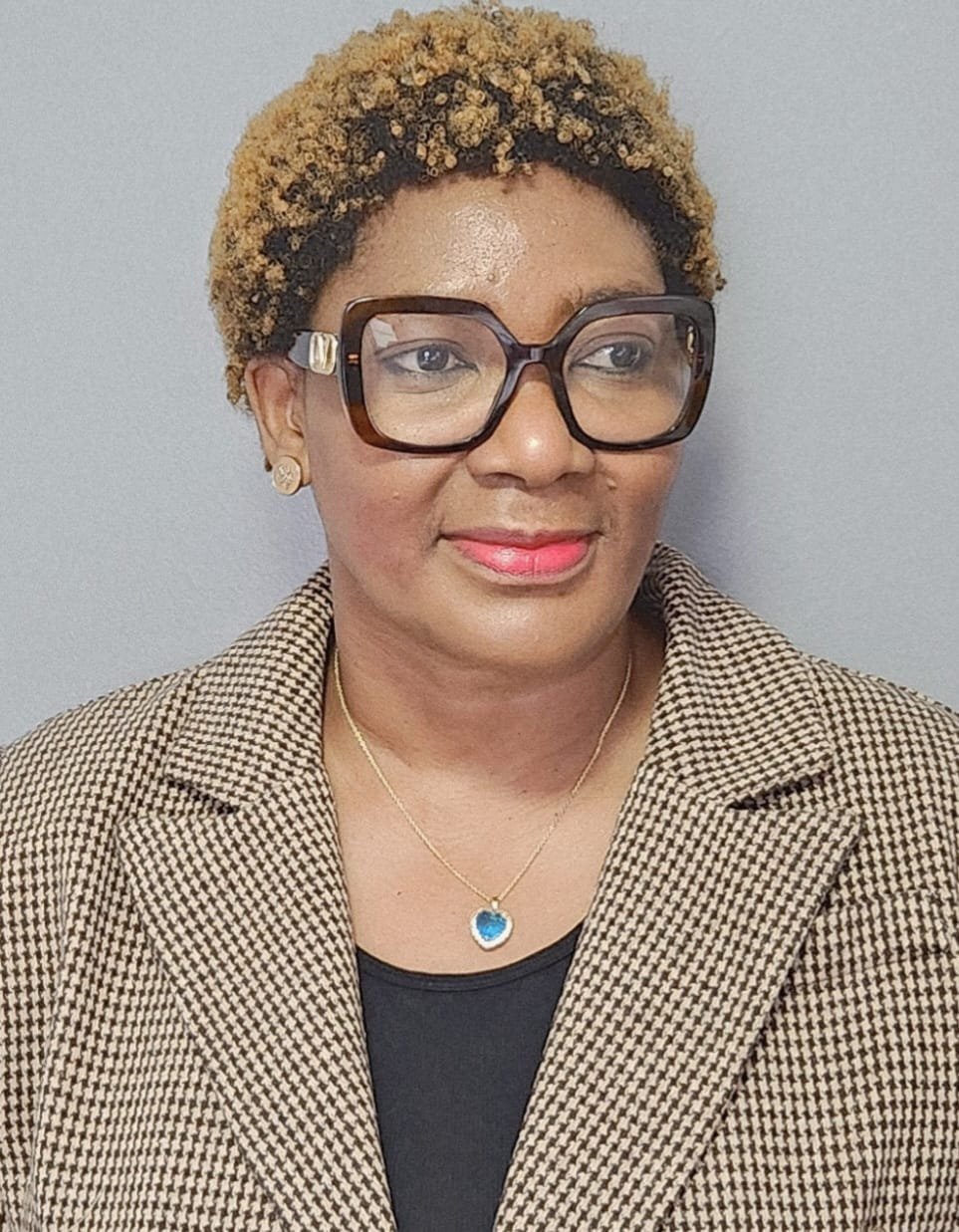
By Dr. Nana Akaeze
This is my voice. This is my belief.
President Bola Ahmed Tinubu came into office with a promise that spoke directly to one of Nigeria’s deepest wounds: insecurity. Before the election of 2023, his security agenda acknowledged the seriousness of terrorism, banditry, kidnapping, weak policing, rural vulnerability, porous borders, poor security welfare, and the urgent need to reform Nigeria’s security architecture. That recognition mattered because it showed that he understood something very important: no national agenda can truly stand where human life is not secure.
I write this not as an enemy of President Tinubu. I write as one of those who want him to succeed. I write as someone who believes that honest support is not blind loyalty. I write as someone who publicly argued early on that his first victory was significantly shaped by the quiet decision of the “silent majority,” especially many ordinary Nigerians of northern extraction who made their political choice with calculation, patience, and expectation.
That is why this appeal is not born out of bitterness. It is born out of concern. It is born out of expectation. It is born out of the painful truth that security remains the first test of leadership, and Nigeria cannot afford to fail that test again.
Three years into a four-year first tenure, one question must be asked with sincerity: Can the ordinary Nigerian honestly say the country is significantly safer today?
For too many families, the answer is no.
Terrorism still troubles the North-East. Banditry still destabilizes the North-West. Kidnapping has grown into a frightening criminal economy. Farmer-herder violence continues to destroy rural livelihoods. Some highways remain unsafe. Rural communities still sleep with one eye open. Families still sell land, borrow money, and negotiate with criminals to rescue loved ones. Schools remain vulnerable. Farmers are afraid to farm. Travelers pray before entering roads that the state should protect.
This is no longer just a security problem. It is a slow weakening of public order.
In a recent Punch opinion article, Tunde Adeparusi warned that Nigeria’s insecurity is no longer made up of separate crises. Terrorism, banditry, kidnapping, rural collapse, illicit arms, poverty, weak justice, and governance failure now overlap and strengthen one another. He described a country where armed groups exploit places where the state is absent, weak, compromised, or distrusted. That is a dangerous place for any nation to be. (Punch Newspapers)
The numbers are heartbreaking. According to the Punch article, citing Human Rights Watch and SBM Intelligence, 2,938 people were kidnapped in Nigeria’s North-West between July 2024 and June 2025, with Zamfara, Kaduna, Katsina, and Sokoto among the worst affected states. These are not ordinary statistics. They are mothers crying, fathers broken, children traumatized, farms abandoned, villages emptied, and communities forced to pay criminals because the state has not protected them enough. (Punch Newspapers)
Even more painful is that the threat continues to touch the lives of children. The Associated Press reported that recent militant attacks on schools in Nigeria left more than 80 children missing, with attacks reported in Borno and Oyo states. When children cannot go to school without the fear of abduction, the nation is not merely facing insecurity; it is watching the future being kidnapped in broad daylight. (AP News https://apnews.com)
The international community is also watching. The U.S. Department of State’s Nigeria Travel Advisory, updated April 8, 2026, classifies Nigeria as Level 3: “Reconsider Travel” because of crime, terrorism, unrest, kidnapping, and inconsistent availability of health care services. It also identifies several states as “Do Not Travel” areas due to terrorism, crime, kidnapping, unrest, and armed violence. (Travel.gov)
This should concern every serious leader. A travel advisory is not just a foreign warning. It is a mirror. It tells us how the world now sees the safety of our country. It affects tourism, investment, diaspora confidence, business expansion, academic exchange, and the willingness of skilled Nigerians abroad to return home and contribute.
President Tinubu’s economic reforms may have long-term intentions. His supporters may continue to argue that difficult reforms take time. But no economic reform can fully succeed where citizens are afraid to travel, farm, trade, invest, worship, study, or sleep.
Security is not one policy among many. Security is the foundation upon which every other policy stands.
A farmer cannot benefit from economic reform if he cannot reach his farm. A trader cannot benefit from market expansion if her goods cannot move safely. A student cannot dream of the future if school has become a target. A business owner cannot invest confidently in a community controlled by fear. A diaspora professional cannot return home with confidence if home feels unsafe. A nation cannot ask for foreign investment while its own citizens are negotiating with kidnappers.
This is why President Tinubu must make security the first visible proof of his leadership before asking Nigerians for a second term.
The silent majority that helped bring this administration into office did not vote for excuses. They voted with expectation. They expected courage. They expected competence. They expected protection. They expected a government that would confront insecurity not with slogans, not with political talking points, but with measurable results.
Nigeria does not need another beautiful security speech. Nigeria needs proof.
The government must now move from promise to performance. Security must become a whole-of-government mission, not a responsibility pushed only to the military or police. The presidency must treat insecurity as a national emergency that connects defense, policing, justice, agriculture, education, border control, technology, finance, and local governance.
Nigerians need measurable security targets. Let the government tell the people how kidnapping will be reduced, which highways will be secured, how many displaced communities will be restored, how schools will be protected, how terror financiers will be prosecuted, how arms traffickers will be stopped, and how rural communities will be defended.
The police must be reformed with urgency. Nigeria cannot continue with an overstretched security system and expect a different result. Recruitment, training, welfare, discipline, forensic capacity, accountability, intelligence gathering, community trust, and responsible decentralization must become serious national priorities.
Rural communities must no longer be treated as forgotten spaces. Farms, villages, markets, schools, and local roads deserve the same seriousness used to secure government quarters and elite convoys. A country that protects power more than people is already losing the moral argument of governance.
Forest Guards or Rangers may be useful, but they must not become another underfunded political experiment. They must be legally backed, properly trained, equipped, supervised, and connected to formal intelligence and policing structures. Nigeria cannot afford another layer of confusion in an already fragile security environment.
The economy of kidnapping must be attacked at the root. Kidnapping is no longer a random crime. It has become a business chain. That chain includes informants, arms suppliers, ransom negotiators, logistics providers, cattle-rustling networks, illegal tax collectors, corrupt collaborators, and those who quietly benefit from others’ fear. If the government does not cut off the money, the guns will continue to speak.
Border governance must also be strengthened. Nigeria’s insecurity is tied to the wider instability of the Sahel. Arms, fighters, money, and violent ideas move across weak borders. A serious security strategy must include stronger surveillance, biometric systems, customs intelligence, regional cooperation, and monitoring of illegal movement.
Security spending must become more transparent. Nigeria has spent huge sums on security over the years, yet many citizens still feel abandoned. The people deserve to know how security funds translate into safer roads, schools, farms, worship centers, markets, and communities.
Victims must not be forgotten. A government serious about security must do more than chase criminals. It must rebuild broken communities. Victims need trauma care, livelihood support, safe return plans, school reopening strategies, and justice. Healing must become part of national security.
And finally, Nigeria must confront the roots that feed insecurity. Military force is necessary, but force alone cannot solve a crisis sustained by poverty, unemployment, corruption, weak justice, political neglect, poor local governance, and loss of trust. As Adeparusi rightly argued, Nigeria cannot simply shoot its way out of a crisis sustained by governance failure. (Punch Newspapers)
President Tinubu still has time to correct the course. But the window is narrowing.
Those of us who want him to succeed must tell the truth clearly: the security performance so far has not matched the weight of the promise. Renewed Hope cannot be complete while communities live under fear. Economic reform cannot be celebrated while citizens cannot move freely. Political loyalty cannot replace honest assessment.
If President Tinubu wants his leadership to stand before history, he must make Nigeria safer—not only for politicians, convoys, and elites, but for farmers, students, traders, travelers, worshippers, women, children, and ordinary citizens in forgotten communities.
This is not the time for defensiveness. This is the time for urgency.
Nigeria is too blessed to be governed by fear. Nigeria is too gifted to be surrendered to criminals. Nigeria is too important to Africa and the world to keep normalizing bloodshed. A country of over 200 million people cannot continue to live as though insecurity is the natural price of citizenship.
Security is essential.
Without safety, there can be no true development. Without public order, there can be no national renewal. Without the protection of lives and property, Renewed Hope will remain incomplete.
Note to Mr. President
Mr. President Bola Ahmed Tinubu, before assuming office, your security agenda recognized insecurity as one of the most urgent problems confronting Nigeria. That recognition gave many Nigerians hope because it showed that you understood the weight of the crisis before power was entrusted to you.
You promised to confront terrorism, banditry, kidnapping, violent extremism, rural insecurity, weak policing, poor security welfare, and the fragile state of Nigeria’s security architecture.
For the record, these were some of the security promises placed before the Nigerian people:
1) Creation of Anti-Terrorist Battalions to confront terrorism, banditry, and violent extremism.
2) Upgrade of tactical communications and logistics for security agencies.
3) Upgrade of weapon systems to address modern security threats.
4) Improvement of local arms production to reduce dependence on imported military equipment.
5) Improvement of salaries and welfare of security personnel.
6) Provision of economic and social assistance to communities affected by security crises.
7) Development of a critical infrastructure protection plan.
8) Revitalization of Rangers or Forest Guards to protect forests, rural communities, and border areas.
9) Enhanced protection of rural and border communities.
10) Improved management of the national identity database for security purposes.
11) Reform and repositioning of the Nigerian Police.
12) Support for civilian neighborhood watch groups and locally based security institutions.
13) Reduction of police attachment to VIP protection so that more officers can protect ordinary citizens.
14) Collaboration with the National Assembly and state governments to reform Nigeria’s security architecture.
Mr. President, as you seek a second term from the people of Nigeria, this is where the story must begin.
How many of these promises can you point to today and say, with confidence, that they have been fully implemented?
How many of us who support you can say loudly and proudly that you have delivered?
How many can ordinary Nigerians in rural communities, farming corridors, highways, schools, markets, and border towns feel in their daily lives?
This is not an attack. It is an honest appeal.
Those who truly support you must be courageous enough to ask the question that history will ask later. The Nigerian people were promised renewed hope, but renewed hope must first become renewed safety.
Because before any second-term conversation can be morally persuasive, the first-term security promise must be honestly examined.
Mr. President, you promised these things.
Now Nigeria needs proof.
The people are watching. History is recording. And Nigeria is waiting for proof.
References
Adeparusi, T. (2026, April 17). Nigeria’s insecurity crisis and the slow death of public order. Punch Newspapers.
Associated Press. (2026, May 17). Latest militant attacks on schools in Nigeria leave more than 80 children missing, officials say.
Civic Hive/BudgIT Foundation. (2023). Policy and schematic assessments of candidates in the 2023 presidential election: Asiwaju Bola Ahmed Tinubu.
U.S. Department of State. (2026, April 8). Nigeria Travel Advisory: Level 3—Reconsider Travel.
Citation for The Awake Voice and Facebook Posts:
Akaeze, N. (2026, May 18). Renewed Hope Must First Become Renewed Safety. The Awake Voice.
Please remember to cite appropriately when using this content.
Support Us-